Wildfires are an increasingly urgent threat across the western United States, and Washington State is no exception. Dry spells, hotter summers, and decades of fire suppression have combined to create forests with unnaturally high fuel loads—conditions that enable fires to become catastrophic. Professional timber (or forest) management offers a proactive pathway to reduce wildfire risk, enhance forest resilience, and protect communities and ecosystems.
Below, I explain how professional management works, what strategies are used, and what benefits (and trade-offs) come with it—especially in the Washington context.
Why Timber Management Matters for Wildfire Prevention
Over the last century, U.S. forest policy leaned heavily toward fire suppression: as soon as a wildfire started, firefighting resources were marshaled to extinguish it. While understandable in many cases, that approach has had unintended consequences:
-
Fuel accumulation: Small trees, brush, and deadwood build up without the regular low-intensity fires that historically cleared them.
-
Forest overcrowding: Trees compete for moisture, sunlight, and nutrients, making them more susceptible to drought, disease, and insect attack—factors that weaken them and make them more flammable.
-
Increased severity: When fires do ignite, they can burn with extreme intensity because of surplus fuel, killing mature trees and burning deep into soils.
In Washington, these conditions are evident, particularly in dry interior forests and parts of the Cascade range. Professional management is one of the tools to reverse those risky trends.
Key Professional Timber Management Strategies for Wildfire Risk Reduction
Here are several strategies used by foresters, state agencies, and private landowners in Washington. Many of them are most effective when used in combination.
-
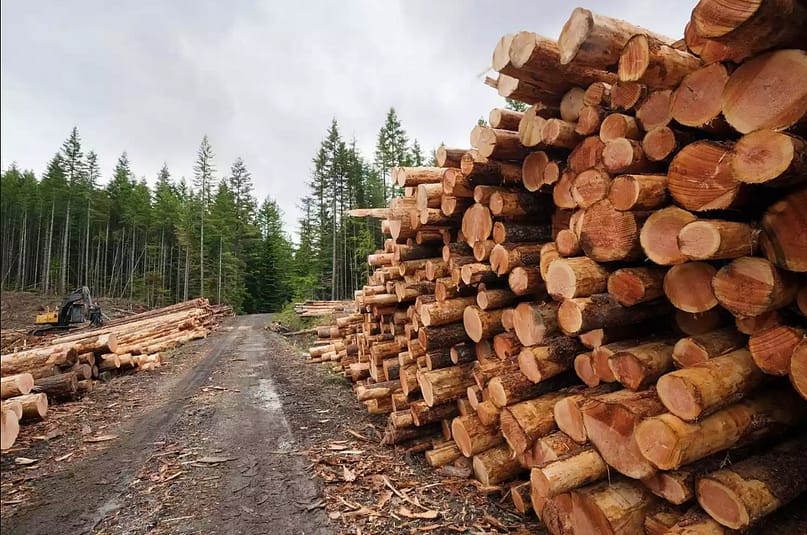
Thinning & Selective Harvesting
Removing smaller, weakened, or closely spaced trees reduces competition and lowers fuel density. By creating more spacing between remaining trees, the likelihood a fire will “ladder” from surface fuels into crowns is reduced.-
Research shows active treatments like thinning help restore ecosystem health and lower wildfire risk.
-
The Washington Forest Protection Association emphasizes thinning, brush removal, and selective harvests as key to reducing catastrophic fire risk.
-
-
Prescribed (Controlled) Burns
Some fire-prone forest types historically experienced frequent low-intensity fires. Foresters reintroduce fire under controlled conditions to consume surface fuels and understory vegetation without harming mature trees.-
The practice “introduces fire back into fire-dependent ecosystems” in a safe, managed manner.
-
The Nature Conservancy notes that on western dry forests, combining thinning with prescribed fire is among the most effective restoration approaches.
-
-
Fuel Breaks and Strategic Harvesting
Fuel breaks are linear zones with reduced vegetation, often placed along roads, ridges, or community interface zones. Managed harvesting near those breaks helps limit fire spread.-
On Washington state lands like the Olympic Experimental State Forest (OESF), timber harvests are interspersed with less managed zones to create a mosaic of forest age and structure.
-
Forest collaboratives in Washington engage multiple stakeholders in planning strategic restoration and logging interventions in fire-prone areas.
-
-
Forest Health Monitoring and Planning
Professional foresters conduct inventories, monitor insect or disease outbreaks, and plan over multi-decade timescales. By spotting vulnerabilities early, preventive action becomes possible.-
Washington’s Integrated Forest Management guidelines help landowners plan for long periods and cover entire forest ownerships.
-
Washington DNR’s “Service Forestry Program” offers assistance to small forest landowners for assessing forest health, crafting stewardship plans, and implementing management.
-
WSU’s extension program offers inventory, permitting, harvest management, and other professional consulting services.
-
-
Landscape-Scale Collaboration
Fire doesn’t respect property lines. Coordinated efforts across landowners (private, tribal, state, federal) allow management to be more effective across entire watersheds or forest regions.-
Forest collaboratives in Washington bring together timber interests, conservation groups, and government agencies to co-design large-scale projects.
-
These collaboratives can streamline planning and help balance ecological, economic, and wildfire risk goals.
-
-
Adaptive Management & Monitoring
Forest management isn’t “set and forget.” Professionals continuously monitor forest response to treatments (e.g. how vegetation regenerates after thinning or burn) and adjust practices based on outcomes and changing climate conditions.
Benefits of Professional Timber Management (Beyond Fire Prevention)
-
Ecosystem resilience: Healthier forests resist pests, disease, and drought better.
-
Wildlife habitat: Proper management can create structural diversity, which is beneficial to many species.
-
Carbon storage: Managed forests can sequester more carbon over time and reduce emissions from catastrophic wildfires.
-
Sustainable timber supply: Harvests provide wood products, supporting rural forest economies.
-
Community safety: Lowering fire risk near human settlements helps protect lives, homes, and infrastructure.
Challenges, Risks, and Trade-Offs
-
Cost & funding: Thinning, planning, and prescribed burns require upfront investment; funding is often limited.
-
Public perception and smoke: Communities sometimes oppose prescribed burns for fear of smoke or potential fire escape.
-
Ecological constraints: Some forests or terrain are not suitable for all treatments (steep slopes, sensitive habitats).
-
Regulatory & permitting hurdles: Environmental reviews, endangered species concerns, and coordination among multiple agencies can slow or block projects.
-
Balancing values: Some stakeholders (e.g. conservationists) worry that aggressive logging or interventions may harm biodiversity or old-growth stands.
Case Example: The 2024 Pioneer Fire (Chelan County, WA)
In 2024, the Pioneer Fire burned roughly 38,735 acres in Chelan County in the vicinity of Okanogan-Wenatchee National Forest. This fire demonstrates how fast fires can spread in the region and underscores the urgency of proactive forest management. While professional management can’t guarantee zero fires, landscapes treated for fuel reduction are better able to withstand or limit the severity of such events.
Best Practices and Recommendations for Washington Stakeholders
-
Incentivize professional planning and implementation (grants, cost-share programs).
-
Strengthen interagency and cross-landowner collaboration to scale treatments across landscapes.
-
Communicate clearly with local communities about the goals, benefits, and risks (especially smoke) of prescribed burns.
-
Continuously monitor outcomes and adjust practices with adaptive management.
-
Prioritize high-risk areas (near communities, steep slopes, fire corridors) for treatment.
-
Combine mechanical thinning and fire-based treatments rather than relying on one method alone.
-
Support workforce development (more trained foresters, prescribed burn crews).